

CANCER SCREENING
Cancer Screening
Early detection strategies, including multi-cancer early detection, to identify cancer before symptoms appear
OVERVIEW
Some of the most serious cancers give no warning until they are already advanced. By the time symptoms appear, the window for early intervention has often narrowed significantly.
Standard screening programs are valuable, but they cover a limited number of cancers and are available only to specific populations based on age and risk factors. For many people, the default approach has been to wait until symptoms appear.
New diagnostic technologies are beginning to change that.
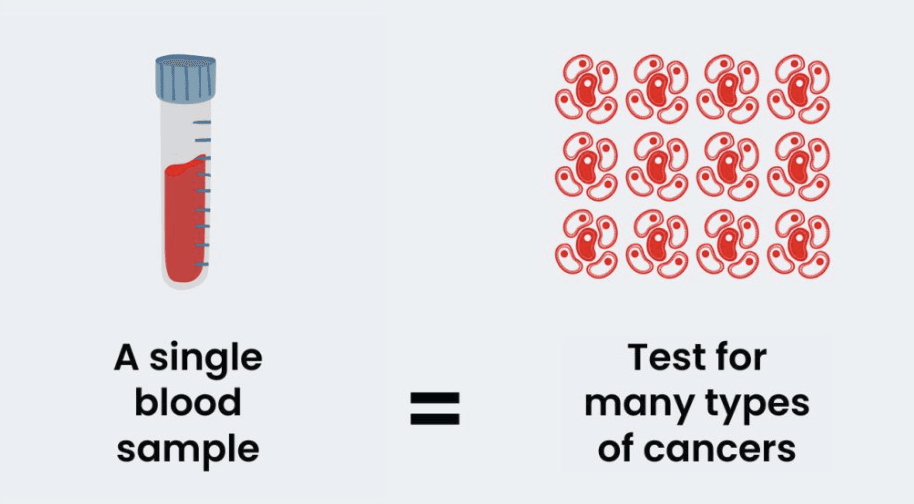
Multi-cancer early detection (MCED) tests can now identify biological signals associated with multiple types of cancer from a single blood draw, sometimes before symptoms develop.
For Canadians seeking cancer screening options beyond what the provincial system offers, Kanata Health provides a physician-guided path to advanced testing.
Kanata Health provides access to these tests through its partner U.S.-based providers. Dr. Ali Sanei, a double board-certified physician with over 20 years of clinical experience guides patients through the full process: from determining whether testing is appropriate, through coordination and testing, to physician-interpreted results.
HOW IT WORKS
How Advanced Cancer Screening Tests Work
Advanced cancer screening tests work by analyzing fragments of DNA circulating in the bloodstream. When cells divide or die, they release small fragments of DNA into the blood. Cancer cells do this as well, and the patterns of those fragments can carry distinctive biological signals.
Multi-cancer early detection tests are designed to identify these signals and, in some cases, help indicate where in the body they may be originating.
This allows a single blood draw to screen for signals associated with multiple cancer types simultaneously, including many that currently have no routine screening option available.
WHO IT MAY BE FOR
Who Should Consider Additional Cancer Screening

You want a more proactive approach to your health
You have a family history of cancer
You are concerned about cancers not covered by standard screening
You prefer earlier insight rather than waiting for symptoms
You are already participating in routine screening and want to go further
Not sure if this applies to you?
ACCESS OPTIONS
Cancer Screening Options for Canadians
Advanced multi-cancer screening tests are not part of standard Canadian screening programs and are not covered by provincial health plans.
For patients seeking physician-guided access with coordinated follow-up, U.S.-based providers currently offer the most comprehensive option.
Kanata Health currently has partnered with GRAIL to provide early detection for more than 50 types of cancers through Galleri® test.

FEATURED TEST
Galleri® Multi-Cancer Early Detection
Most cancer screening tests follow the same model: one test, one cancer type. The Galleri® test takes a different approach.
Instead of targeting a single cancer, Galleri analyzes biological signals in your bloodstream from a single draw. These signals may be associated with more than 50 types of cancer simultaneously, including many that currently have no routine screening option available.
At Kanata Health, we provide access to Galleri through our U.S.-based testing partner and guide patients through evaluation, testing, and interpretation of results.
Galleri analyzes fragments of DNA circulating in your bloodstream.
When cells break down, they release small fragments of DNA into the blood. Cancer cells do this as well, but the patterns of DNA they release can carry distinct biological signals.
Galleri is designed to detect these signals and determine whether they are associated with cancer. If a signal is detected, the test can also help predict where in the body it may be originating.
Galleri can detect signals associated with more than 50 types of cancer, including pancreatic, ovarian, liver, and other cancers that currently have no standard screening option.
Galleri
Short overview of how multi-cancer early detection works
Galleri has been evaluated in clinical studies, including the PATHFINDER 2 study, a large U.S. study of multi-cancer early detection testing in adults eligible for cancer screening.
In PATHFINDER 2, Galleri was evaluated alongside recommended standard screening. Reported results showed that adding Galleri increased cancer detection by more than seven-fold compared with recommended screening alone. More than half of cancers detected by Galleri were early stage, and approximately three-quarters were cancer types without recommended screening options.
These findings support Galleri’s role as a complementary screening tool — not a replacement for mammograms, colonoscopies, Pap tests, or other recommended screening.
+
Increase in cancers detected when added to recommended screening
Participants (PATHFINDER 2)
Galleri-detected cancers had no recommended screening option
COST & ACCESS
Galleri Cost and Access for Canadians
Galleri is not covered by Canadian provincial health plans. For Canadians seeking access domestically, availability remains very limited and pricing is typically $2,000 CAD or higher.
For patients accessing Galleri through U.S.-based providers, the test itself is generally priced lower, though total cost may vary depending on consultation, coordination, and any travel or follow-up care.
Before any testing is arranged, Dr. Sanei will review whether Galleri is appropriate for your situation and confirm all expected costs, so you can make an informed decision before proceeding.
HOW IT WORKS
How to Access
Galleri Cancer Screening
A simple, physician-guided process to help you make informed decisions.
01
Book a consultation ($150, Private Pay)
Review your history, risk factors, and screening goals with Dr. Sanei.
03
Test coordination
Testing is arranged through a U.S.-based provider with clear instructions.
04
Results and follow-up
Review your results with Dr. Sanei and discuss appropriate next steps.
Most patients complete this process within a few weeks.
Frequently Asked Questions
Straight answers about how Kanata Health works, what the process involves, and whether it may be right for you.
What are the limitations of traditional cancer screening methods?
Standard cancer screening programs usually focus on a small number of cancers (e.g., breast, colorectal, cervical). Moreover, the eligibility is based on age or specific risk factors. Furthermore, many cancers, including pancreatic and ovarian, have no routine screening options. This means many cancers are still detected only after symptoms appear.
Do these tests replace standard cancer screening?
No. They are designed to complement existing screening programs
What does Galleri Cancer Screening Test do?
Galleri cancer screening test screens for signals associated with multiple cancer types. It may detect cancers without routine screening options and it helps guide further diagnostic evaluation.
What doesn't the Galleri Cancer Screening Test do?
This screening test does not detect all cancers nor does it diagnose cancer. Galleri is most effective when used with physician guidance and appropriate follow-up.
Does Galleri replace mammograms or colonoscopy?
No. Galleri is designed to complement existing screening programs, not replace them. Standard screening methods remain the recommended approach for the cancers they are designed to detect. Galleri adds a broader layer of detection across cancer types that currently have no routine screening option.
Do I need to travel to the United States?
For the Galleri test, a blood draw at a U.S. facility is required. Most patients in BC complete this as a same-day trip to Washington State. Dr. Sanei will explain the logistics during your consultation.
What happens if my cancer screening result is positive?
A positive result does not mean you have cancer. It means a signal was detected that requires further evaluation. Dr. Sanei guides you through appropriate next steps and follow-up testing.
What does a negative cancer screening result mean?
A negative result means no cancer signal was detected at the time of testing. It does not guarantee that cancer is not present or will not develop later.
You'll have full clarity before making any decisions.
No referral needed. Virtual consultation. Clear pricing before you proceed.